Organizing Your Digital Family Archive
Don't let your restored photos get lost again. Best practices for digital storage, metadata, and sharing.
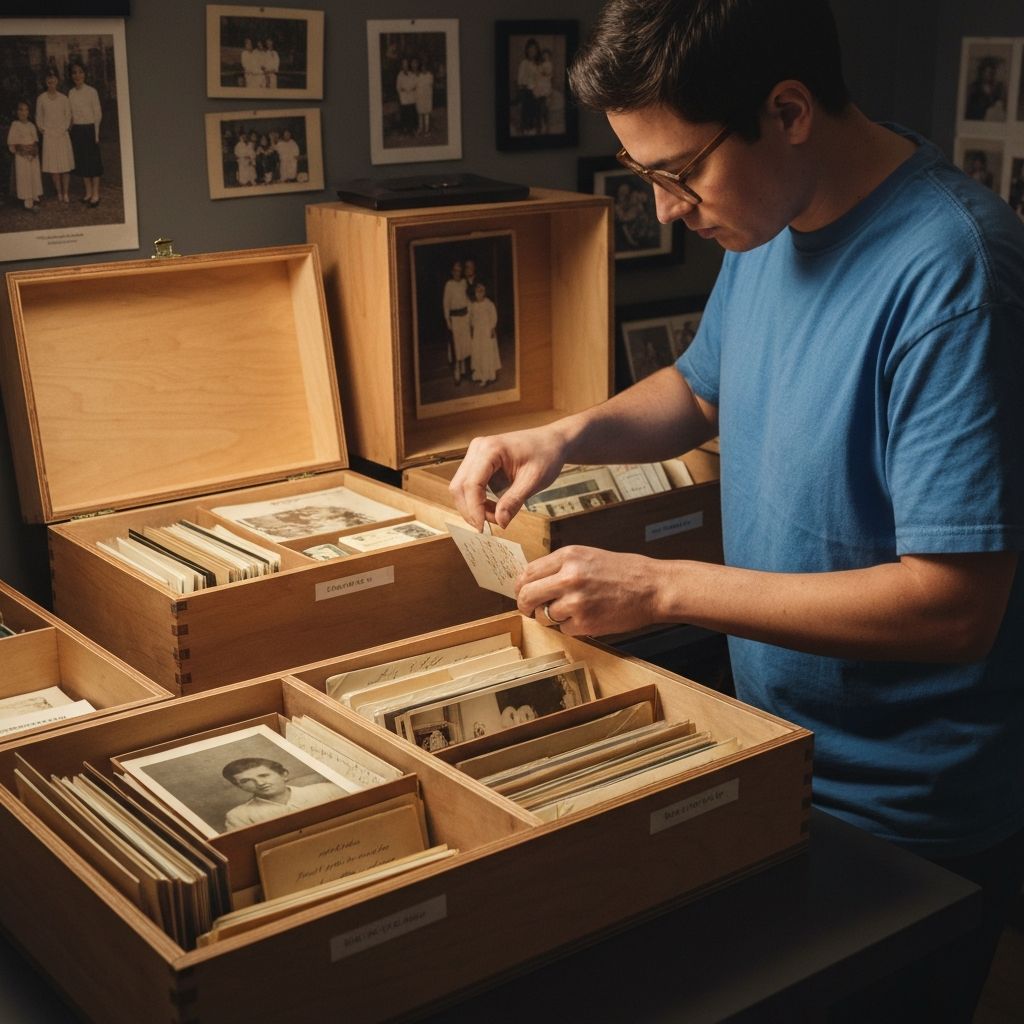
Digital Preservation 101
You have done the hard work. You scanned your old photos, restored the damage, maybe even colorized the black and white ones. Now comes the question most people overlook: how do you store and organize these files so they last another hundred years?
Physical photos survived decades in shoeboxes. Digital files, paradoxically, can be more fragile. Hard drives fail. Cloud services shut down. File formats become obsolete. Without a deliberate preservation strategy, your restored treasures could vanish far faster than the originals ever would.
The 3-2-1 Backup Rule
The foundation of digital preservation is the 3-2-1 rule:
- 3 copies of every file
- 2 different storage media (e.g., SSD and cloud)
- 1 offsite copy (cloud storage or a drive at a relative's house)
This sounds excessive until you lose a hard drive. And everyone loses a hard drive eventually.
Recommended Storage Setup
| Copy | Location | Purpose |
|---|---|---|
| Primary | Your computer or phone | Daily access and sharing |
| Backup 1 | External SSD or NAS | Local backup in case of device failure |
| Backup 2 | Cloud storage (iCloud, Google Photos, etc.) | Offsite backup, disaster recovery |
For family archives specifically, consider sharing one copy with a trusted family member. This creates a natural offsite backup while ensuring the collection survives even if something happens to your storage.
Naming Your Files
Good file naming is the simplest and most effective organizational tool. A consistent naming convention makes files findable without any special software.
Recommended Format
YYYY-MM-DD_LastName_Description.extension
Examples
1945-06-15_Rodriguez_WeddingPortrait.jpg
1962-08-XX_Chen_FamilyReunion.png
1978-00-00_Jenkins_BabyPhoto.jpg
Use XX or 00 for unknown months or days. This keeps chronological sorting intact while acknowledging gaps in your knowledge.
Adding Metadata
Beyond file names, photos can carry embedded metadata (EXIF/IPTC data) that survives file transfers and renames. Use a free tool like ExifTool or Adobe Bridge to add:
- Date taken — the original date, not the scan date
- Location — city, country, or address if known
- People — names of everyone in the photo
- Description — context about the event or occasion
- Source — who provided the original, where the physical copy is stored
This metadata travels with the file. Even if someone renames it, the information persists inside the image file itself.
Folder Structure
Keep your folder structure simple and intuitive. Over-complicated hierarchies become confusing and lead to misfiled photos.
Suggested Structure
Family Archive/
  Originals/           (unedited scans)
  Restored/            (AI-restored versions)
    By Year/
      1940s/
      1950s/
      ...
    By Person/
      Grandma Rosa/
      Uncle Miguel/
  Projects/            (gifts, collages, albums)
The key principle: separate originals from restored versions. Never overwrite an original scan with a restored version. You may want to re-restore with better technology in the future.
Choosing File Formats
Not all image formats are equal for archival purposes:
- TIFF — best for archival. Lossless, widely supported, but large files
- PNG — good lossless alternative, smaller than TIFF, universally viewable
- JPEG — fine for sharing and display, but each save slightly degrades quality
- HEIC/HEIF — efficient but not universally supported yet. Avoid for archival
For your master archive, save in PNG or TIFF. Create JPEG versions for sharing on social media or messaging apps.
Sharing With Family
The whole point of a family archive is to be shared. Consider these approaches:
Shared Cloud Album
Create a shared album on iCloud, Google Photos, or Amazon Photos. Invite family members to view and contribute. This is the easiest option for non-technical family members.
Family Website or Blog
For larger collections, a simple website (even a free Google Sites page) can serve as a family archive. Add context, stories, and dates alongside the photos.
Printed Photo Books
There is something irreplaceable about a physical photo book. Services like Shutterfly, Blurb, or Apple Photos can create beautiful printed albums from your restored digital files. Consider making copies for multiple family members — they make incredible gifts.
Annual Family Archive Update
Make it a tradition. Once a year (perhaps around a holiday), gather new photos, scan any recently discovered prints, and update the shared archive. This turns preservation into a family activity rather than a solo chore.
Common Pitfalls
- Relying on a single storage service. If Google shuts down Photos, do you have a backup?
- Not labeling photos. "IMG_4382.jpg" means nothing in ten years. Rename everything.
- Waiting too long. The people who can identify faces and places in old photos are getting older. Record their knowledge now.
- Perfectionism. Don't wait until you have the perfect system. Start with what you have. Organize as you go.
Start Today
Your family photos are not just images — they are the visual DNA of your family. Every face, every place, every moment captured in those photos deserves to survive for the next generation.
Start small: pick ten photos, restore them with Restory, name them properly, back them up in two places, and share them with someone who will care. That is the beginning of a family archive that will last.